Share this resource or email it to a friend!
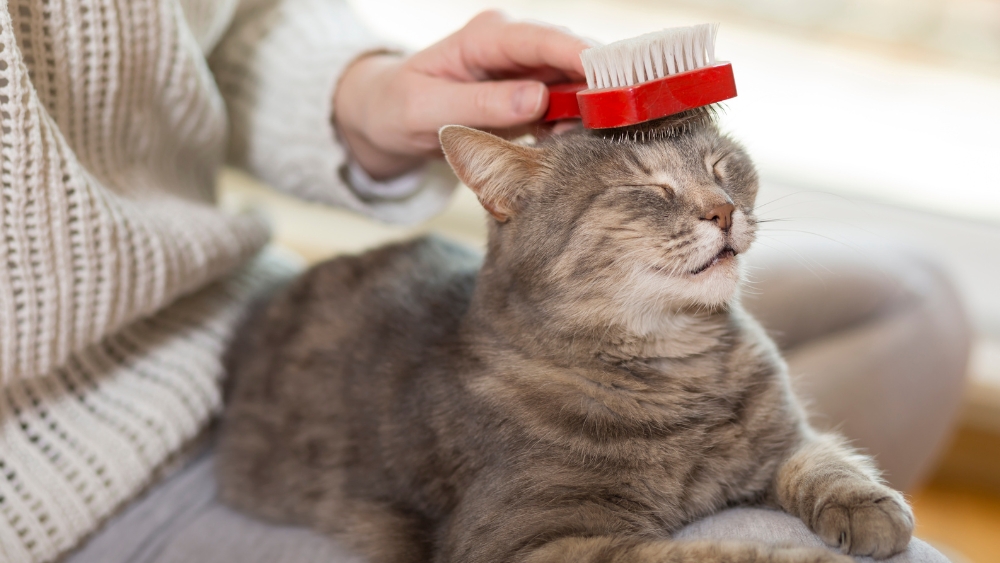
Cats groom themselves two to five hours or 30-50% a day. Normal grooming keeps their hair clean, cools them, and relieves stress by releasing endorphins and providing comfort.
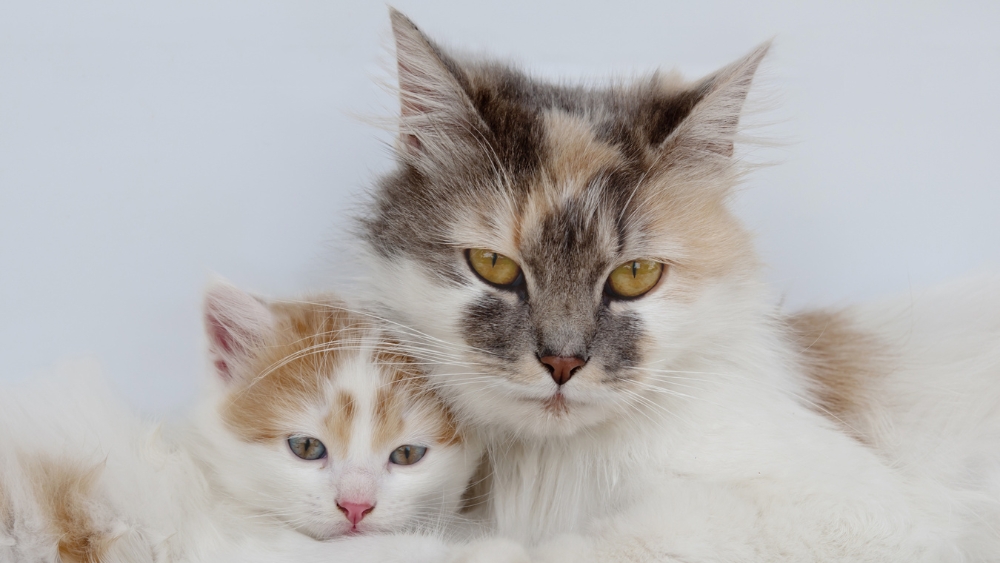
Allogrooming (grooming among members of the same species) builds social bonds by creating a common group scent. Allogrooming often indicates hierarchy with higher-ranking cats grooming lesser-ranking ones. In addition, a queen may groom kittens by holding them down to show her dominance or to calm them after she corrects them.
One may wonder what so much grooming has to do with causing a person’s allergic reaction to kittens and cats, and why a particular kitten (defined as from birth to one year of age by the National Kitten Coalition) or cat causes an allergic reaction but not other kittens or cats.
The Causes of Allergic Reactions in People
The human body’s immune system produces IgE (immunoglobulin E), a protein that helps fight off infections and other threats. When the immune system mistakenly identifies harmless substances, such as allergens, as dangerous and overreacts, the body produces histamine and other chemicals. These cause irritation or inflammation of mucous membranes, which line the nose, throat, lungs, and conjunctiva (inner lining of the eyelids). In response, the body produces excess mucus to remove the allergen, which then causes allergy symptoms, such as sneezing, watery and/or itchy eyes, and a runny nose.
When someone is allergic to kittens or cats, it is usually due to the allergen Fel d 1 (pronounced Fel DEE ONE), a small protein primarily produced by the salivary and sebaceous glands. When kittens and cats groom themselves or each other, they spread the allergen on their hair and skin. The allergen eventually is dispersed into the environment via dander.
Cats are the third most common cause of respiratory allergies in people and the second most common cause of indoor allergies. To date, eight cat allergens have been recognized by the World Health Organization/International Union of Immunological Societies. Any of these allergens may cause reactions in one person and not another. Whereas people may be allergic to more than one cat allergen, up to 95% of cat-allergic people react to Fel d 1.
The Production of Fel d 1
Fel d 1 is a small protein that was the first allergen to be identified in the domestic cat; the protein was named Feline domesticus allergen 1, or Fel d 1. The salivary and sebaceous glands account for most of the production of Fel d 1.
Cats have five major salivary glands. They are found in the mouth, and their main function is to lubricate food and protect the mucosa (the inner lining of the mouth).
Cats have a large number of sebaceous glands, which are spread throughout the body in the dermis (the middle layer of the skin). Depending on their location, these glands make different amounts of Fel d 1. Larger glands are located around the eyes and ears, on the paws, prepuce (sheath surrounding the penis), scrotum, and upper base of the tail.
The sebaceous glands manufacture an oily substance, sebum, that lubricates the hair and skin and gives the hair its glossy sheen. In addition, sebum waterproofs and maintains the health of the hair and skin. Sebaceous glands also serve in scent marking.
During grooming, Fel d 1 in the salivary and sebaceous glands spreads to the hair and skin. It is then distributed in the environment via shed hair and dander (dried flakes of microscopic dead skin cells coated with saliva and dried sebum). New skin cells produced in the epidermis (the top skin layer) replace the dead skin cells that are shed. This process takes about 21 days.
The production of Fel d 1 is controlled by a kitten’s or cat’s genetic makeup and varies widely within the same kitten or cat over the course of the day and year, and possibly during a lifetime. Fel d 1 levels also vary from one kitten to another and one cat to another. Nevertheless, all kittens and cats, regardless of gender, age, hair length, color, pattern, body weight, or indoor/outdoor lifestyle, produce Fel d 1.
Un-neutered kittens and cats usually produce more Fel d 1 than neutered kittens and cats or female kittens and cats, regardless of whether the female is un-spayed or spayed. However, because genetics accounts for varying Fel d 1 production from animal to animal, the level of Fel d 1 in an un-neutered kitten or cat may be lower than the Fel d 1 level of a neutered or un-spayed or spayed kitten or cat.
The Difference Between Dander and Dandruff
It is important to distinguish dander from dandruff. Both involve the shedding of dead skin cells. Whereas, all kittens and cats have dander, only some have dandruff. Shedding dander is a normal process. Shedding more than a small amount of dandruff may indicate health problems and be accompanied by itching, dull hair, hair loss, and red or scaly skin patches. Dander is microscopic and may remain airborne; dandruff is larger and visible as flakes on the animal’s skin and hair. Due to its larger size, dandruff is less likely to remain airborne or be inhaled.
Cats shed their hair throughout the year, but during spring and fall, they go through heavy hair loss. Changes in the amount of daylight are the major cause of seasonal shedding, but other factors include genetics, nutrition, changes in temperature, and the environment.
In the spring, cats shed in preparation for longer, warmer days. In the fall, they start to replace their shed hair with new hair in anticipation of shorter days and colder temperatures. The amount of time cats spend outdoors vs. indoors may affect when cats shed or grow new hair; strictly indoor cats may shed constantly due to air conditioning and heating.
Shedding of dander is normal; it
- removes dead or damaged hair
- spreads sebum
- stimulates blood flow to the skin
- prevents matting and tangles
- regulates body temperature
- promotes the growth of new hair
Shedding more than small amounts of dandruff is not normal and may be caused by:
- stress, leading to overgrooming
- parasites, such as fleas
- infections, such as ringworm
- malnutrition, which cause poor hair health and hair loss
- medical issues that prevent adequate grooming, such as kidney disease, diabetes mellitus, pancreatitis, arthritis, or obesity
- food or environmental allergies
- cancers, such as cutaneous lymphoma
The Role of Dander in Causing Allergic Reactions in People
Dander is tiny and lightweight, allowing it to remain suspended in the environment for long periods of time and making it easy to inhale. Dander is also jagged in shape and sticky. These characteristics allow dander to cling to clothing, fabrics, upholstered furniture, and even walls, which facilitate its spreading to places where kittens and cats have never even been. Once allergens have settled, they are stirred up and released back into the environment by vacuuming, sweeping, and dusting. To mitigate stirring up allergens, wet sweep and dust rather than dry sweep and dust.
When it comes to vacuuming, consider several important factors, such as:
- using a vacuum with a certified HEPA filter, which is specifically designed to deal with pet dander
- purchasing a vacuum based on the dominant floor covering in your home, e.g., hard surfaces or carpets, and choose a vacuum with a tool for upholstered furniture
- moving the vacuum slowly to remove more dander and dust than you stir up
- considering a canister-style vacuum cleaner if you have stairs, because it is easier to maneuver
- wearing a high-filtration mask when vacuuming, sweeping, dusting, and emptying the vacuum canister or bag
The Creation of a Diet to Reduce Fel d 1
It has long been known that immunoglobulin Y (IgY), an antibody to Fel d 1, was concentrated in the egg yolks of chickens who share their environment with cats. Nestlé Purina PetCare Company discovered that IgY in the egg yolks could bind to Fel d 1 in the saliva of cats, thus inhibiting Fel d 1 from causing an allergic response in people sensitized to the allergen. With this in mind, Purina created a diet containing IgY to study its effect on allergen production in kittens and cats.
The study measured the amount of Fel d 1 in the hair of kittens and cats from seven months to 17 years of age. Those fed only this diet had an average reduction of 47% of Fel d 1 after three weeks. Another study funded by Nestlé Purina PetCare Global Resources measured the amount of Fel d 1 in the saliva and hair of kittens eight to 21 weeks of age who were fed a similar diet. The study showed that there were significant reductions of Fel d 1 in the kittens’ saliva and hair.
These and other studies led to a major breakthrough in the management of Fel d 1. Purina ONE LiveClear and Purina Pro Plan LiveClear remain the only diets that reduce Fel d 1.1 The antibody in these diets, IgY, can be ethically produced and sourced in large quantities. The diet does not affect Fe l d 1 production in the kittens or cats. Rather, Fel d 1 is neutralized in the saliva when the diet, coated with IgY, is consumed. This reduces the amount of allergen that kittens and cats spread onto their hair and skin through grooming, and ultimately into the environment.
The Effects of Grooming and Diet in Spreading Fel d 1 in Kittens
Kittens who are less than four weeks of age are unable to regulate their body temperature. They do not shed much hair, which insulates and keeps them warm. Only between six and 12 months of age do kittens typically begin shedding their baby hair and grow in longer and coarser hair.
Kittens typically begin to imitate their mother’s grooming by grooming themselves around four weeks of age. They begin grooming one another around six weeks of age. According to Dr. Ebenezer Satyaraj PhD, Director of Molecular Nutrition, Nestlé Purina Research and lead investigator on the research that led to the development of Pro Plan LiveClear, active Fel d 1 is probably transferred to their hair and skin when they groom; however their levels of Fel d 1 are likely lower than adult cats. In addition, although experts at Nestle Purina have not measured Fel d 1 levels in kittens and are not aware of scientific literature that addresses this, they surmise that kitten levels of Fel d 1 are likely lower until their grooming habits have been further fixed.
According to experts at Nestlé Purina, orphan kittens should be bottle fed until they are ready for weaning, at which time they may be transitioned to a LiveClear kitten formula; they will benefit from the diet, typically after three weeks, or whenever the diet is introduced as the only food. As always, transitioning kittens or cats from one food to another should be done gradually to give their palate and GI tract time to adjust. Before, during, and after kitten and cat allergens have been reduced by the diet, fosters and pet parents should use all their tools to manage all the allergens that affect them.
The Additional Ways to Reduce Fel d 1
Other products are available, such as sprays, shampoos, and wipes that can be used on kittens and cats, as well as sprays that can be used in the environment and on furniture. Search the internet for “cat allergen reducer products” to learn more.
Bathing is frequently suggested as a way to reduce the amount of Fel d 1 on a kitten’s or cat’s hair and skin. Most fosters, pet parents, kittens, and cats are not fans of bathing. In addition, the amount of Fel d 1 on the kittens and cats returns to its original level in about two days; the level in the environment returns in about 24 hours.
Letting kittens and cats spend more time outdoors is not a good solution for reducing allergy symptoms in people. Besides outdoor dangers, kittens and cats may be exposed to other allergens, such as pollen and mold, which they bring into the home. The cumulative effect of these allergens may cause even more severe allergic reactions in people.
The majority of allergic pet parents do not even consider rehoming their kittens and cats, despite recommendations by some physicians and allergists to do so. Nonetheless, allergy is a reason for pet surrender to an animal shelter and a deterrent to kitten and cat adoption.
When all is said and done, managing allergens is nothing to sneeze at as it enables kittens and cats to be fostered and adopted and keeps them in their homes.
__________________
1 The National Kitten Coalition does not endorse products. The information in this article is for educational purposes only.